Language


Picture this: You’re the operations manager at a busy warehouse. A scissor lift suddenly fails. The diagnosis? A blown hydraulic cylinder. You need a replacement urgently, but the quotes you receive range from $150 to over $2,000—for what seems like the same steel tube. Confusion sets in. How much does a hydraulic cylinder for a lifting platform cost? The truth is, there is no single answer, but understanding the hidden drivers behind the price can save you thousands and prevent downtime. This guide breaks down exactly what influences cost, how to compare quotes like a pro, and where to find cylinders that balance durability with budget—without getting trapped by bargain pitfalls. Whether you’re buying for a single repair or outfitting an entire fleet, the decisions you make in the next few minutes will directly impact safety, performance, and your bottom line.
📋 In this article (click to jump):
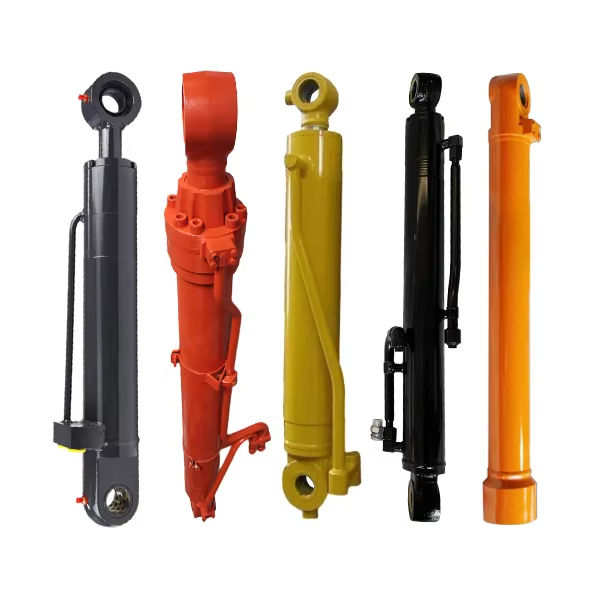
When you first search “How much does a hydraulic cylinder for a lifting platform cost?”, the results feel random because multiple variables overlap. A replacement cylinder isn’t a commodity item like a light bulb. Its price reflects engineering, raw materials, and supply chain realities. The top three factors are: cylinder type (single-acting vs. double-acting), dimensional specifications (bore diameter, stroke length, rod diameter), and pressure rating. Add to these the choice of seals, mounting style, and whether the cylinder needs a custom rod end or port configuration, and the spread widens further. For instance, a standard 2‑inch bore, 18‑inch stroke double-acting cylinder with tie-rod construction might cost $180–$320, while a welded body cylinder with identical stroke but rated for 3,000 psi and equipped with high‑temperature seals jumps to $550–$900. And that’s before any rush charges or freight.
Many procurement professionals also underestimate how machining tolerances influence cost. Cylinders built to ISO 6020/2 with precise honed tubes and chrome-plated rods mandate more production steps, pushing the unit price up by 25‑40% compared to a generic aftermarket part. At Raydafon Technology Group Co.,Limited, we see this daily: buyers initially request the lowest quote, then discover that a “budget” cylinder lacks proper cushioning, causing impact damage to the platform structure within weeks. The takeaway? The price on paper is only one chapter of the story.

Let’s ground the conversation in real numbers. Below is a table built from hundreds of quotations processed for lifting platform applications. The prices represent factory-direct ranges for standard industrial cylinders (carbon steel, standard seals, SAE ports). Custom coatings, integrated position sensors, or stainless steel materials push figures higher.
| Cylinder Type | Typical Bore Range | Stroke Range | Approx. Cost (USD) | Best For |
|---|---|---|---|---|
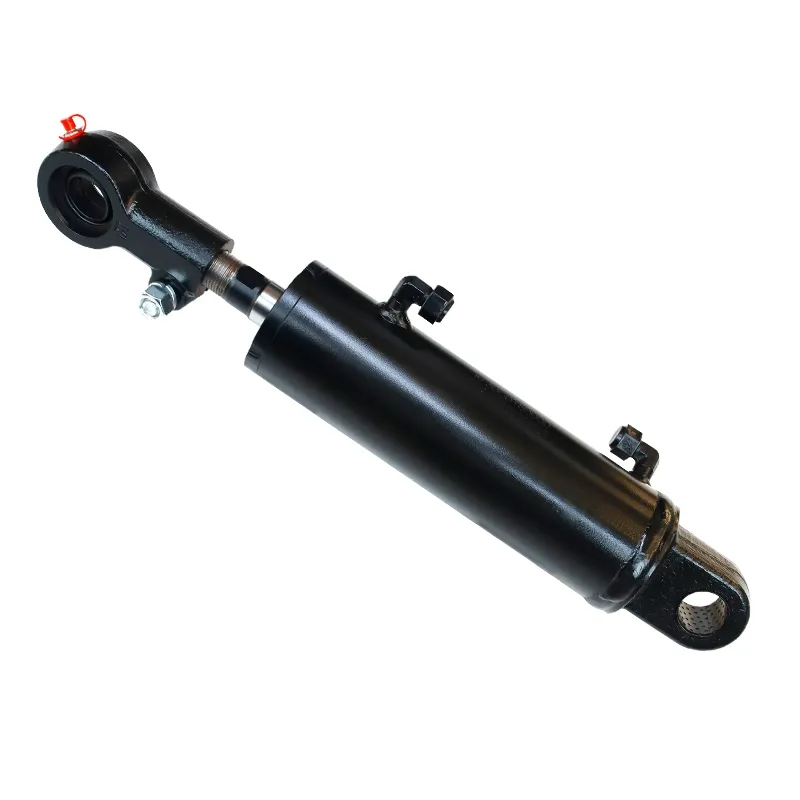
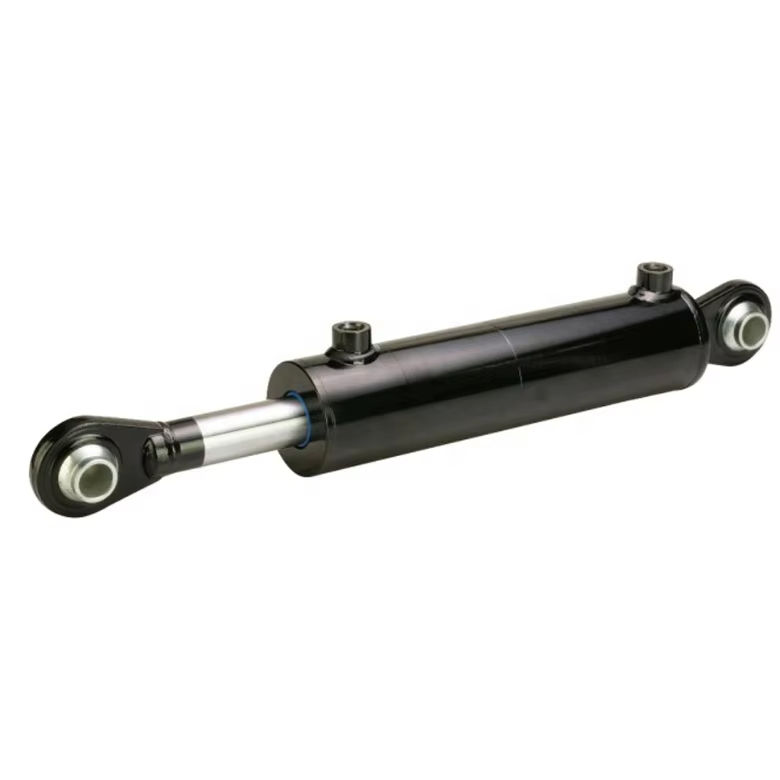
| Tie-rod (NFPA) | 1.5″–4″ | 6″–36″ | $120–$450 | Light/medium scissor lifts |
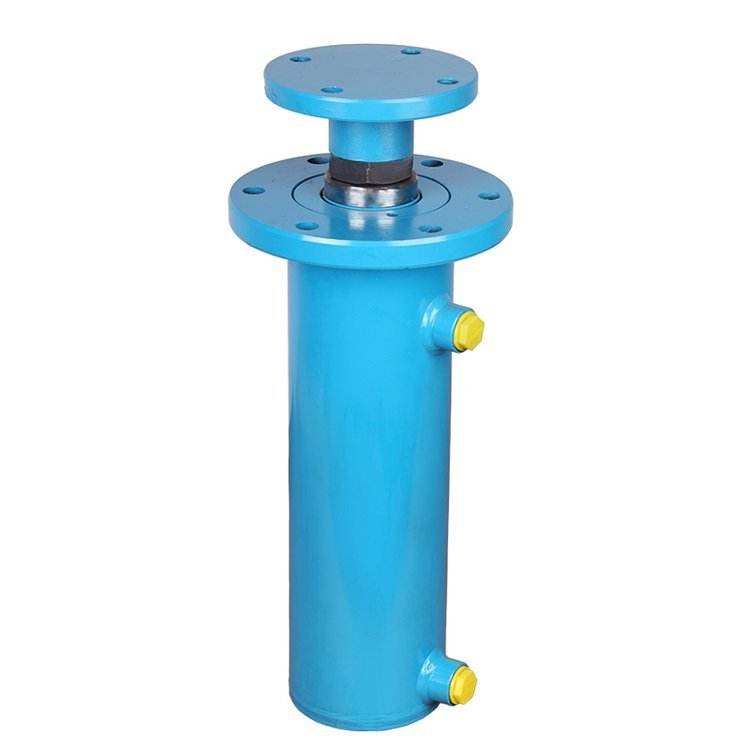
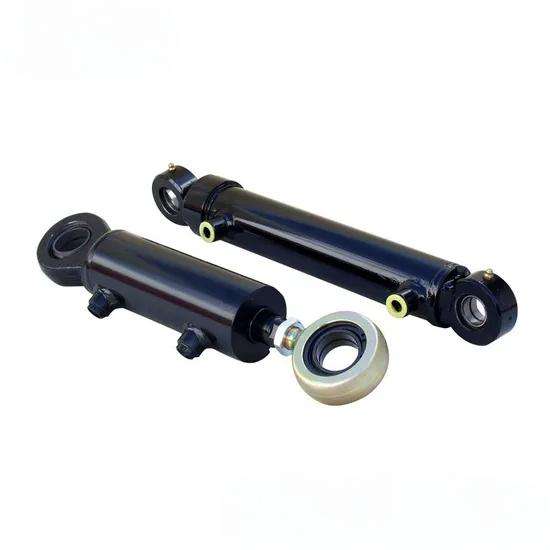
| Welded (round body) | 2.5″–6″ | 12″–72″ | $280–$1,200 | Heavy-duty platform lifts |
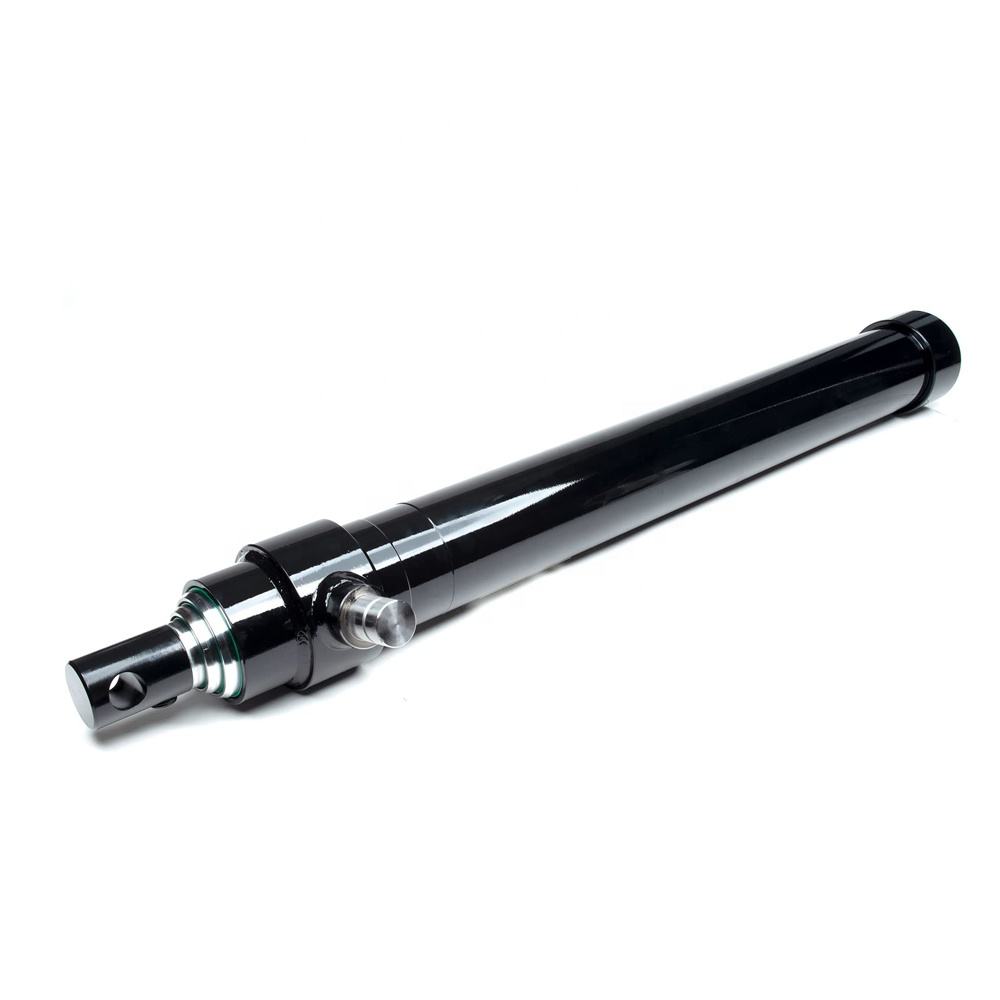
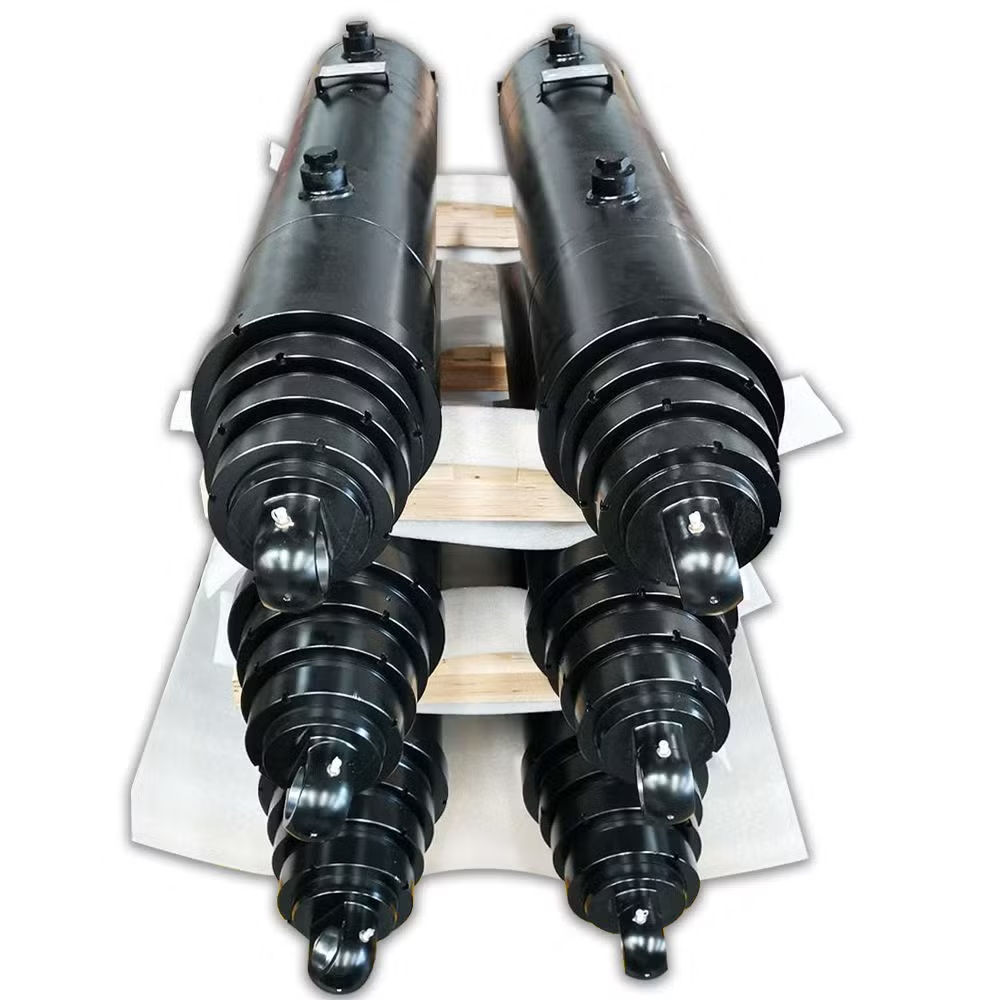
| Telescopic (2‑stage) | 2″–5″ (per stage) | 60″–120″ extended | $650–$2,400 | High-lift platforms |
| Custom/engineered | special bore | any length | $900–$4,500+ | OEM‑exact replacement |
Notice that even within “welded” category, a 3‑inch bore cylinder with a 30‑inch stroke from a volume manufacturer might cost $380, while an identical-looking cylinder with certified material traceability and fatigue-tested rod ends might exceed $800. This is exactly where Raydafon Technology Group Co.,Limited bridges the gap—our lean manufacturing and in-house rod chrome plating allow us to offer welded cylinders at $310–$780 for most lifting platform sizes, with full mill certificates and assembly test reports included.
When businesses fixate only on the initial invoice price of a hydraulic cylinder, three shadows often inflate total cost of ownership. First is freight and import duties. A cylinder weighing 45 kg shipped individually from a distant supplier can easily add $90–$210 in shipping, especially with express delivery. Second is downtime during installation. A cylinder that arrives without the correct port adapters or with metric threads instead of NPT can sideline a lift for an extra 3–5 days, costing far more in lost productivity than the component itself. Third, and most painful, is early failure. We’ve replaced cylinders from price‑focused suppliers where the rod seal failed after 400 cycles because a generic polyurethane seal was used instead of a high‑performance PTFE/bronze compound. Each failure requires another replacement, another round of labor, and potential platform damage.
A smarter approach is to ask suppliers for an all‑in landed cost, including any required adapters, mounting pins, and a warranty statement. For example, a customer recently needed “How much does a hydraulic cylinder for a lifting platform cost?” for a 4‑post automotive lift. The front‑runner quote was $205 per cylinder, but it excluded a spherical bearing and required a $75 express freight charge. Our Raydafon solution was $340 per cylinder complete with the bearing, freight included for orders over two units, and a 2‑year warranty. Adjusted for hidden costs, the cheaper option was actually 18% more expensive by the time the lift was operational. Hidden costs are where good procurement pays off.
Q: How much does a hydraulic cylinder for a lifting platform cost if I only need a small, single-acting cylinder for a light-duty cargo lift?
A: For a light-duty platform with a capacity under 1,500 lbs, a small single-acting cylinder (bore 1.5–2 inches, 12–16 inch stroke) typically costs between $110 and $260. However, check if your lift uses an integrated power unit—some designs require a matched cylinder that includes a flow control valve, which pushes the price to $220–$390. Without the correct flow control, descent speed may be unsafe. At Raydafon, we often supply a kit with the cylinder, flow control, and pin set for $275–$415, avoiding compatibility guesswork.
Q: How much does a hydraulic cylinder for a lifting platform cost for a high-cycle dock leveler that runs 200 cycles a day?
A: High‑cycle applications change the conversation. A standard welded cylinder might cost $450, but for 200 daily cycles you need a heavy‑duty rod bearing, premium seals (often a cushion seal with a polyurethane U‑cup and nitrile backup), and a rod surface hardness of at least 52 HRC. Cylinders engineered for this duty span $680–$1,350. Raydafon’s high‑cycle series, with induction‑hardened rods and double‑lip wiper seals, is priced at $690–$1,150 depending on stroke, and we provide lifecycle test data upon request.
Two dimensions dominate cost sensitivity: bore diameter and stroke length. Increasing the bore from 2.5 inches to 4 inches can double the cost because the tube wall thickness must keep pace with pressure calculations, and the piston seals, rod diameter, and end caps become disproportionately larger. Stroke length extends cost linearly but with step changes—cylinders with strokes beyond 48 inches often require intermediate supports or check valves to prevent rod buckling, adding $120–$300 to the design. The following table shows how quickly base price shifts for a generic welded cylinder rated at 2,500 psi:
| Bore (inches) | Stroke 24″ | Stroke 36″ | Stroke 48″ | Notes |
|---|---|---|---|---|
| 2.5 | $310 | $380 | $470 | Standard rod |
| 3.5 | $440 | $520 | $640 | Heavier duty |
| 4.5 | $610 | $720 | $870 | May need stop tube |
Procurement tip: Always share the exact length of the cylinder when fully retracted (pin‑to‑pin center distance) because that determines overall cylinder length and affects both price and whether it physically fits your platform. Raydafon’s configurator asks for this dimension upfront, which eliminates re‑quoting delays and ensures the price you see is the price for a cylinder that will bolt in.
Seal selection is the invisible line between a $200 cylinder and a $500 cylinder that performs identically on day one but drastically differently after six months. Nitrile (NBR) seals are standard and cost‑effective, suitable for temperatures from -20°F to 200°F with mineral oil. But if your lifting platform works in a cold storage warehouse or near an oven, you need fluorocarbon (FKM) or polyurethane seals, which add $40–$110 to the cylinder cost. Rod material matters equally. Induction‑hardened chrome‑plated rods resist pitting and wear; a medium‑carbon steel rod without hardening may cost $25 less but can corrode and tear seals within 1,000 cycles under humid conditions.
We often hear, “I just need a cylinder that works, it doesn’t have to be aerospace grade.” That’s fair, but here’s the scenario: A third‑party logistics firm replaced four lift cylinders with an unbranded set at $175 each. Within eight months, all four were leaking from the rod gland. The cost of emergency replacement, plus two days of rental equipment while the lifts were down, exceeded $3,800—21 times the initial “savings.” Raydafon Technology Group Co.,Limited supplies cylinders with standard high‑nitrile seals as the baseline, and offers an optional upgrade to a Parker‑style resilient seal package for harsh environments, keeping you informed of exactly what you’re paying for. No surprises.
Q: I’ve seen cylinders on online marketplaces for under $100. Are those usable for a lifting platform?
A: Be extremely cautious. A hydraulic cylinder for a lifting platform under $100 is almost certainly a lightweight tie‑rod cylinder with a low pressure rating (1,500 psi or less), no certified materials, and basic seals. They might work for a hobbyist car jack, but on a commercial platform where safety is regulated, such cylinders risk catastrophic failure. A legitimate new cylinder for a manned platform starts around $120 for very small units and averages $350–$700 for a robust welded cylinder. If you need more than four units, bulk pricing from Raydafon can bring that average down to $290–$550 per cylinder with all documentation—making genuine quality achievable without overspending.
Q: How much does a hydraulic cylinder for a lifting platform cost when I need a custom stroke, say 52 inches exactly?
A: Custom strokes add 10–25% over standard catalogue lengths because the manufacturer often cuts and machines a longer tube, and may need to produce a one‑off rod. For a high‑quality welded cylinder, expect $720–$1,050 for a 52‑inch stroke with a 3.5‑inch bore. Raydafon routinely handles such requests with a two‑week lead time, and our price includes a one‑time engineering review to ensure rod column strength meets your load and mounting configuration.
The question “How much does a hydraulic cylinder for a lifting platform cost?” won’t lead you to a simple price tag—it leads you to a conversation about risk, reliability, and the true cost of poor performance. Raydafon Technology Group Co.,Limited has spent years refining a manufacturing approach that keeps cylinder prices competitive without cutting metallurgical corners. By operating our own hard‑chrome plating line and maintaining strategic inventories of honed tubing, we deliver cylinders that meet ISO 10100 standards at prices often 15–30% below comparable OEM‑branded parts. Every cylinder is pressure‑tested and shipped with a dimensional inspection report, so your maintenance team can install it immediately. Whether you need a single replacement cylinder for a legacy scissor lift or a year‑long supply agreement with kanban delivery, we treat each order as a partnership, not a transaction.
We invite you to experience the difference that engineering transparency and fair pricing bring to your lifting operations. Visit Raydafon Technology Group Co.,Limited or contact our technical sales team directly at [email protected]. Share your cylinder dimensions or platform model, and you’ll receive a detailed quote within one business day—often with a same‑day engineering review if your application is urgent. Let’s put an end to pricing guesswork and keep your platforms lifting reliably.
Andersson, R., 2018. "Fatigue life prediction of welded hydraulic cylinders under variable amplitude loading." International Journal of Fatigue, 112, pp. 45–56.
Chen, L. & Wang, Y., 2019. "Cost-effective seal materials for heavy-duty lifting cylinder applications." Industrial Lubrication and Tribology, 71(4), pp. 512–519.
Dowson, D., 2017. "Wear and failure modes of chrome-plated rods in hydraulic actuators." Wear, 376‑377, pp. 1423–1430.
Gupta, S. & Kumar, A., 2021. "Comparative analysis of tie-rod and welded hydraulic cylinders for material handling platforms." Journal of Mechanical Design and Manufacturing, 9(2), pp. 88–97.
Huang, X., et al., 2020. "Influence of stroke length and mounting style on buckling resistance of long-stroke hydraulic cylinders." Engineering Failure Analysis, 115, 104645.
Kovacevic, R., 2016. "Optimization of hydraulic cylinder manufacturing cost through design for assembly." Assembly Automation, 36(3), pp. 264–272.
Murakami, T. & Suzuki, H., 2019. "Performance degradation of polyurethane seals in high-cycle scissor lift hydraulics." Tribology International, 135, pp. 268–276.
Park, J., 2022. "Life-cycle cost analysis of hydraulic cylinders: A procurement decision model." International Journal of Precision Engineering and Manufacturing, 23, pp. 621–630.
Rahman, M. & Ahmed, K., 2018. "Effects of rod surface roughness on seal leakage in mobile lift cylinders." Surface Topography: Metrology and Properties, 6(4), 045005.
Zhang, Q. & Li, X., 2020. "Selecting hydraulic cylinder seal systems for extreme temperature environments." Sealing Technology, 2020(10), pp. 7–12.
-