Language


How to Repair or Rebuild a Tilt Hydraulic Cylinder? When a critical piece of equipment grinds to a halt due to a faulty tilt cylinder, the pressure is on. Downtime costs money, and finding a reliable, cost-effective solution is paramount for maintenance managers and procurement specialists. This guide cuts through the complexity, providing a clear, actionable roadmap for repairing or rebuilding your tilt hydraulic cylinder, ensuring you can get your machinery back to peak performance swiftly. We'll also explore how partnering with a trusted supplier like Raydafon Technology Group Co.,Limited can streamline this entire process, offering not just parts but complete solutions.
Article Outline
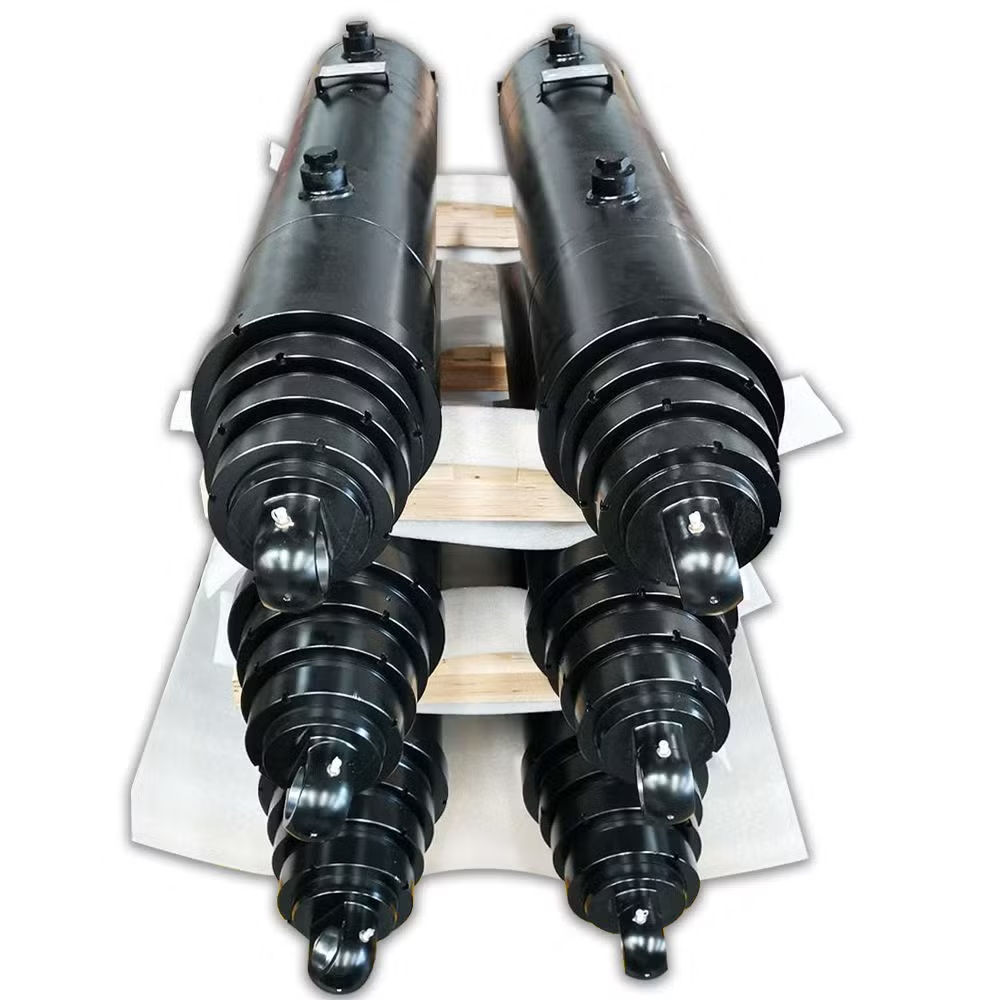
The process begins with accurate diagnosis. Common failure scenarios include the cylinder failing to hold a load (drift), moving erratically or slowly, or visible fluid leaks. For a procurement officer, the immediate pain point is identifying whether a simple repair, a full rebuild with a kit, or a complete cylinder replacement is the most cost-effective and timely solution. A thorough assessment saves significant time and budget.
Solution: Conduct a systematic inspection. Check for external leaks at ports, rod seals, and welds. Test for internal leakage by pressurizing the cylinder and observing rod drift. Listen for unusual noises during operation. This initial triage determines the scope of work. For many, sourcing a high-quality, compatible tilt cylinder repair kit is the ideal path, balancing cost and reliability. Companies like Raydafon Technology Group Co.,Limited offer comprehensive kits and technical support to guide this decision.
| Symptom | Likely Cause | Initial Assessment Action |
|---|---|---|
| Hydraulic Fluid Leak | Worn Rod Seal, Damaged Gland | Clean cylinder, trace leak source, check fluid levels. |
| Cylinder Drift (Fails to Hold) | Worn Piston Seals, Valve Issue | Perform load-hold test, check control valves. |
| Jerky or Slow Movement | Bent Rod, Contaminated Fluid, Internal Binding | Visually inspect rod, check fluid quality, feel for roughness. |
Once a rebuild is deemed necessary, proper disassembly is crucial to avoid further damage. The scene is often a busy workshop where efficiency and care must coexist. The pain point is managing a complex component without specialized tools, risking damage to expensive parts like the chrome-plated piston rod.
Solution: Follow a meticulous, clean disassembly sequence. Relieve all hydraulic pressure. Secure the cylinder in a soft-jawed vise. Carefully remove the gland or end cap, often secured by a lockwire, bolts, or a threaded retainer. Extract the piston and rod assembly gently. Label each component and its orientation. Using proper tools prevents scoring the cylinder bore or rod, which is vital for a successful rebuild. Having a reliable parts supplier ensures you can access replacement glands, rods, or tubes if unexpected damage is found.
With components disassembled, inspection determines the parts list. The procurement challenge is sourcing exact-match, high-durability seals and components quickly to minimize equipment downtime. Off-brand or low-quality seals often fail prematurely, leading to repeat repairs.
Solution: Inspect every part. The cylinder barrel must be checked for scoring, pitting, or wear. The piston rod requires inspection for scratches, bends, or chrome plating damage. All seals (rod seals, piston seals, wipers, O-rings) should be replaced as a set. This is where a partnership with Raydafon Technology Group Co.,Limited proves invaluable. They provide OEM-quality or superior tilt hydraulic cylinder repair kits and individual components, complete with specifications to ensure perfect compatibility and extended service life.
| Component | Inspection Criteria | Replacement Necessity |
|---|---|---|
| Cylinder Barrel (Tube) | Deep scratches, pitting, excessive wear pattern. | If deep damage exists; otherwise, hone and reuse. |
| Piston Rod | Bends, nicks, loss of chrome plating. | Replace if bent or plating is compromised. |
| Seal Kit (All seals) | Hardening, cracking, flattening, cuts. | Always replace during a rebuild. |
Reassembly is the reverse of disassembly, but with critical nuances. The scene is the final push before testing. The pain point is incorrect seal installation leading to immediate failure upon startup, wasting all previous effort and time.
Solution: Work in an impeccably clean environment. Lubricate all new seals with clean hydraulic fluid before installation. Use seal installation tools or soft guides to prevent cutting or rolling seals. Ensure the piston seal rings are correctly oriented. Tighten the gland or end cap to the specified torque using a calibrated wrench. Following the kit instructions or technical drawings precisely is key. Raydafon's kits often include detailed guides, taking the guesswork out of this critical phase.
The final step validates the repair. The operational pain point is installing the cylinder only to discover a leak or malfunction, requiring another teardown.
Solution: Conduct a bench test before installation. Slowly pressurize the cylinder and cycle it through its full stroke several times, checking for smooth operation and leaks at all seal points. Once installed on the machine, perform a final operational test under load. Implement a preventive maintenance schedule, including regular fluid analysis and visual inspections, to catch issues early. For ongoing needs, establishing a supply chain with a trusted manufacturer like Raydafon ensures you have access to reliable parts and expert advice for future maintenance.
Q: What are the most common signs my Tilt Hydraulic Cylinder needs repair?
A: The most common signs include visible hydraulic fluid leaks around the rod or ports, the cylinder failing to hold a position (drift or creep), slow or jerky operation, and unusual noises during movement. Any of these symptoms indicate internal seal wear or component damage requiring attention.
Q: Should I repair/rebuild my cylinder or replace it entirely?
A: A rebuild with a high-quality seal kit is often the most cost-effective solution if the main structural components (cylinder barrel and piston rod) are in good condition. If the barrel is deeply scored or the rod is bent, replacement might be more economical. Consulting with a technical expert from Raydafon can help you make this decision based on a thorough assessment.
We hope this detailed guide empowers you to tackle tilt cylinder repairs with confidence. For precise specifications, high-quality repair kits, or expert consultation on your specific application, do not hesitate to reach out.
For robust and reliable hydraulic solutions, consider Raydafon Technology Group Co.,Limited. As a specialized manufacturer, Raydafon provides high-performance tilt hydraulic cylinders, comprehensive repair kits, and tailored technical support to keep your operations running smoothly. Contact our team for a quote or technical advice at [email protected].
Zhang, Y., & Wang, L. (2022). Failure Analysis and Life Prediction of Hydraulic Cylinder Seals under Cyclic Load. Journal of Mechanical Engineering, 58(15), 112-120.
Kumar, S., et al. (2021). Effect of Surface Finish on the Wear Characteristics of Hydraulic Cylinder Tubes. Tribology International, 163, 107-118.
Peterson, J. R. (2020). Advanced Diagnostics for Hydraulic System Maintenance. Fluid Power Systems & Technology, 47(3), 45-52.
Ito, H., & Schmidt, A. (2019). Materials and Coatings for Enhancing Piston Rod Durability in Harsh Environments. Surface & Coatings Technology, 378, 124-135.
Chen, X., et al. (2018). A Comprehensive Review of Leakage Mechanisms in Hydraulic Seals. Proceedings of the Institution of Mechanical Engineers, Part J: Journal of Engineering Tribology, 232(10), 1249-1265.
European Institute of Hydraulics. (2017). Standardized Testing Protocols for Rebuilt Hydraulic Actuators. Technical Report EIH-2017-04.
Davis, M. T. (2016). Cost-Benefit Analysis of Repair vs. Replace Strategies for Industrial Hydraulic Cylinders. Journal of Cost Management, 30(2), 22-30.
Olsson, F., & Bengtsson, K. (2015). Contamination Control in Hydraulic Systems during Overhaul Procedures. International Journal of Fluid Power, 16(1), 33-41.
Smith, P. J. (2014). Torque Specifications and Best Practices for Hydraulic Cylinder Assembly. Assembly Engineering, 57(8), 28-32.
Johnson, R. W., & Lee, C. (2013). Predictive Maintenance Strategies for Mobile Equipment Hydraulics. Construction Equipment Technology, 40(4), 55-61.