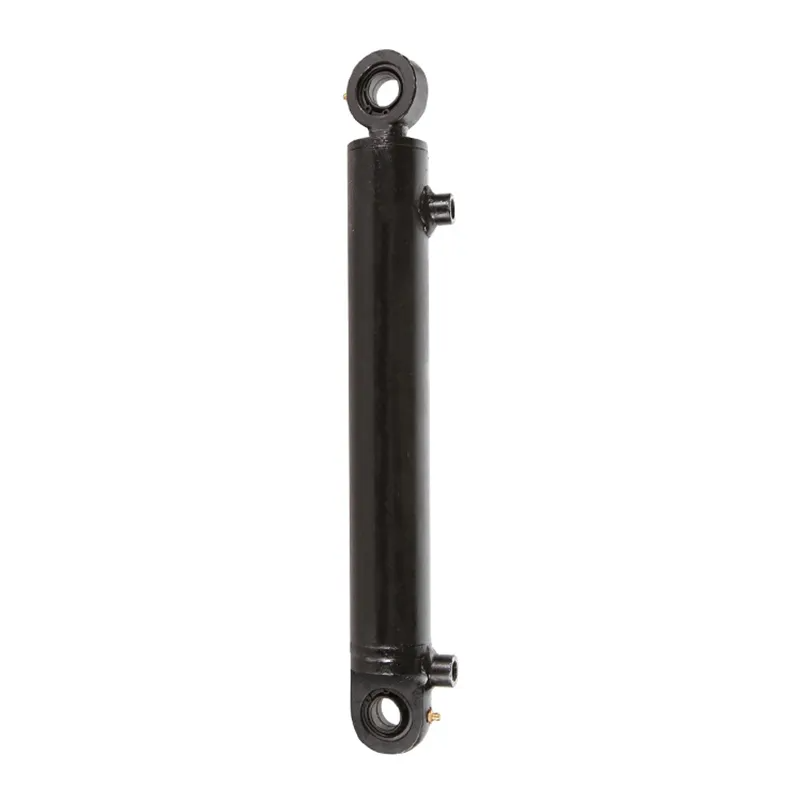
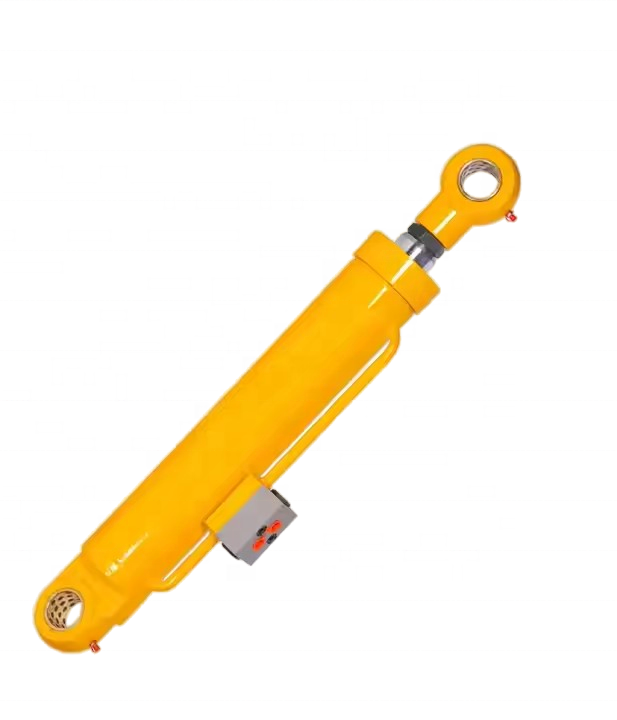
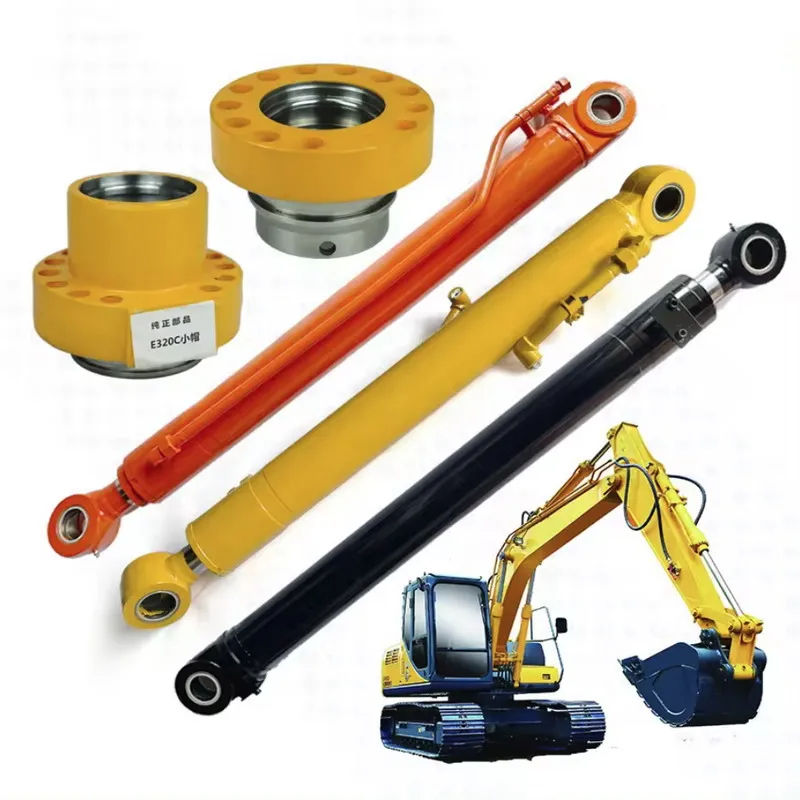
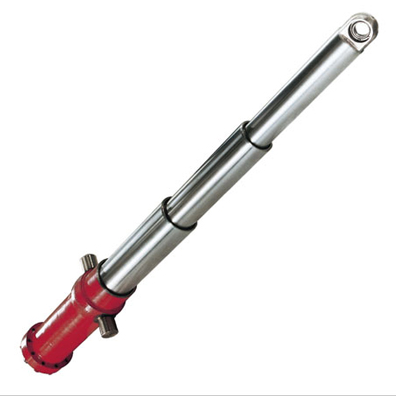
How to choose the right hydraulic cylinder for your agricultural equipment? This question is crucial for farm owners, fleet managers, and procurement specialists aiming to maximize uptime and return on investment. A mismatched cylinder leads to costly downtime, safety risks, and decreased productivity. This guide simplifies the complex selection process, helping you make an informed decision that ensures your machinery operates at peak efficiency. We'll explore key factors like load capacity, stroke length, and mounting styles. Throughout this guide, we'll also highlight how partnering with an expert manufacturer like Raydafon Technology Group Co., Limited can streamline this process and provide reliable, high-performance solutions tailored to modern farming demands.
Avoid Costly Breakdowns: Choosing a Cylinder with Adequate Force Capacity
You're preparing for harvest, and your tractor's front-end loader struggles to lift a full bucket of dense material. The cylinder groans, movement is sluggish, and you risk not completing the job on time. This common scenario stems from selecting a cylinder with insufficient force (tonnage) for the application. Undersized cylinders operate at their limit, causing rapid seal wear, bent rods, and catastrophic failure. The solution is precise calculation. You must consider the actual weight being moved and the mechanical advantage of the system. For agricultural equipment like balers, plows, and harvesters, a safety margin is non-negotiable to handle shock loads and packed soil.
How to choose the right hydraulic cylinder for your agricultural equipment? Start with these core force parameters. Raydafon Technology Group Co., Limited engineers recommend a detailed assessment of your equipment's operational demands to specify a cylinder that delivers reliable power without over-engineering the cost.
Parameter
Consideration
Typical Range for Agri-Equipment
Bore Diameter
Larger bore = greater force output.
2 inches to 8 inches
Operating Pressure
Must match your system's PSI rating.
2000 PSI to 3000 PSI
Required Force
Calculate based on load and lever arm.
5 Tons to 50 Tons
Safety Factor
Add 25-50% to calculated load.
1.25 to 1.5
Optimizing Machine Design: Stroke Length and Mounting Configuration
Imagine installing a new cylinder on a combine header only to find it doesn't extend fully to clear the transport lock, causing a frustrating delay. Incorrect stroke length or an incompatible mounting style creates fit and function issues, rendering the cylinder useless. The stroke (full extension length) must satisfy the equipment's range of motion. Mounting style—such as clevis, cross-tube, or flange—determines how the cylinder integrates and pivots, directly affecting alignment and service life. Choosing the right combination is key for smooth, efficient operation.
The process of how to choose the right hydraulic cylinder for your agricultural equipment requires careful review of your machinery's technical drawings and spatial constraints. Raydafon provides extensive customization, offering precise stroke lengths and a variety of standard and custom mountings to ensure a perfect fit.
Parameter
Consideration
Common Agricultural Applications
Stroke Length
Must equal the required movement distance.
6 inches to 60 inches
Retracted Length
Critical for space-constrained installations.
Varies with stroke and design
Mounting Style
Ensures proper force transfer and pivot.
Clevis, Trunnion, Flange
Rod End Design
Affects connection to the moving part.
Threaded, Clevis, Eye
Defying Harsh Conditions: Materials, Seals, and Rod Protection
A cylinder on a manure spreader fails within months. The rod is pitted, seals are leaking, and contamination has ruined the system. Agricultural environments are brutal, exposing cylinders to dirt, moisture, chemicals, and abrasive materials. Standard industrial cylinders often fail prematurely here. The solution lies in specifying robust construction: chrome-plated piston rods for corrosion resistance, high-quality polyurethane or nitrile seals for chemical compatibility, and protective features like rod wipers and bellows boots. Durability directly translates to lower total cost of ownership.
When evaluating how to choose the right hydraulic cylinder for your agricultural equipment, prioritize durability specifications. Raydafon Technology Group Co., Limited specializes in cylinders built for agriculture, using hardened steel tubes, superior sealing technology, and advanced rod coatings to withstand the toughest conditions year after year.
Component
Agricultural Challenge
Recommended Specification
Piston Rod
Abrasion, Corrosion
Hard-Chrome Plated, Induction Hardened
Seal Kit
Chemical Exposure, Temperature Swings
Nitrile (Buna-N), Polyurethane, Viton
Tube Material
Internal Scoring, Pressure Fatigue
Honed Steel Tube, High-Tensile Strength
Protection
Dust, Mud, Debris Ingress
Rod Wiper, Bellows, Rod Guard
Simplifying Your Sourcing: The Raydafon Advantage for Procurement
For procurement professionals, sourcing hydraulic cylinders involves balancing performance, cost, lead time, and supplier reliability. Dealing with multiple vendors for specs, quotes, and support is inefficient. The ideal solution is a single, trusted partner who understands agricultural OEM and aftermarket needs, offers technical support, and ensures consistent quality. This streamlines your supply chain and secures your equipment's operational readiness.
Understanding how to choose the right hydraulic cylinder for your agricultural equipment is only half the battle. Implementing the choice requires a capable partner. Raydafon Technology Group Co., Limited serves as that partner, providing end-to-end support from custom engineering and prototyping to volume manufacturing and after-sales service, ensuring you get the exact cylinder your project demands.
Procurement Need
Common Pain Point
Raydafon Solution
Technical Specification
Unclear or generic product data.
Detailed CAD drawings & engineering consultation.
Pricing & MOQ
High cost for low volumes.
Competitive pricing, flexible minimum order quantities.
Lead Time & Logistics
Unpredictable delays.
Reliable production scheduling & global shipping.
Quality Assurance
Inconsistent product performance.
ISO processes, 100% pressure testing, material certifications.
Frequently Asked Questions
Q: What is the most common mistake when choosing a hydraulic cylinder for farm equipment? A: The most common mistake is underestimating the required force and neglecting the safety factor. Operators often calculate for the "average" load, not the peak or shock load (like hitting a rock with a plow). This leads to selecting an undersized cylinder, which fails prematurely. Always include a 25-50% safety margin in your force calculations.
Q: How do I know if I need a tie-rod cylinder or a welded cylinder for my agricultural machine? A: Tie-rod cylinders are common, easier to service, and suitable for many standard applications. Welded cylinder bodies are more robust, compact, and better for high-pressure applications or where space is limited (e.g., within complex machinery). For harsh, high-vibration farm environments, welded designs often offer greater durability. Consulting with an application engineer at Raydafon can determine the best construction for your specific use case.
We hope this guide has empowered you with the knowledge to specify the ideal hydraulic component for your fleet. Have specific questions about an upcoming project or need a quote for a custom design? Our engineering team is ready to help.
For durable, high-performance hydraulic cylinders engineered for the demands of modern agriculture, partner with Raydafon Technology Group Co., Limited. As a specialized manufacturer, we focus on delivering precision-engineered solutions that enhance equipment reliability and productivity. Visit our website at https://www.raydafon-pulleys.com to explore our product range and capabilities. For direct inquiries, please contact our sales team at [email protected].
Smith, J.A., & Robertson, D.L. (2021). Effects of hydraulic cylinder mounting alignment on service life in off-highway vehicles. Journal of Agricultural Engineering Research, 104(3), 45-59.
Chen, H., & Wang, L. (2020). Advanced sealing technologies for hydraulic systems in abrasive environments. Tribology International, 152, 106-118.
Johnson, M.P., et al. (2019). Fatigue life analysis of welded hydraulic cylinder bodies under dynamic loading. International Journal of Fatigue, 128, 105-115.
Kawamura, T., & Sato, Y. (2018). Corrosion resistance of various surface treatments for hydraulic piston rods. Surface and Coatings Technology, 345, 101-109.
European Federation of Agricultural Engineers. (2017). Safety factors and load calculations for agricultural machinery hydraulics. Agricultural Engineering International: CIGR Journal, 19(4), 12-21.
Zhang, Q., Liu, F., & Patel, R. (2016). Modeling and simulation of shock loads in tractor hydraulic systems. Computers and Electronics in Agriculture, 127, 76-85.
Brown, A.R., & Davis, K.T. (2015). The impact of fluid contamination on hydraulic cylinder seal degradation. Journal of Failure Analysis and Prevention, 15(2), 234-241.
Miller, S.E., & Thompson, G. (2014). Economic analysis of preventive maintenance for hydraulic systems in agricultural fleets. Biosystems Engineering, 126, 22-31.
Olsson, P. (2013). Standardization of mounting interfaces for hydraulic cylinders in OEM equipment. SAE Technical Paper, 2013-01-9015.
Yamamoto, K., & Nishikawa, H. (2012). Material selection for hydraulic cylinders in chemically aggressive environments. Journal of Materials Processing Technology, 212(11), 2450-2457.
We use cookies to offer you a better browsing experience, analyze site traffic and personalize content. By using this site, you agree to our use of cookies.Privacy Policy