Language


Imagine you're on a tight deadline to source hydraulic cylinders for a heavy-duty dump truck project. You've narrowed it down to 5 stage telescopic hydraulic cylinders, but then the supplier asks: "Do you need single-acting or double-acting?" Suddenly, you're stuck. Making the wrong choice could lead to system inefficiency, safety risks, or costly redesigns. So, what is the difference between single-acting and double-acting 5 stage telescopic hydraulic cylinders? In simple terms, the core distinction lies in how they retract. A single-acting cylinder uses hydraulic pressure to extend and relies on external force—like gravity or a load—to retract. A double-acting cylinder uses hydraulic pressure for both extension and retraction, giving you powered control in both directions. But this is just the surface. For procurement professionals, understanding the operational, maintenance, and cost implications is critical. At Raydafon Technology Group Co.,Limited, we’ve spent decades helping global buyers navigate these decisions, ensuring they get the right cylinder for their specific application without overspending. This guide breaks down the mechanics, real-world applications, and key selection factors in a clear, jargon-free way. Let’s dive into the details so you can make a confident, informed purchase.
Article Outline
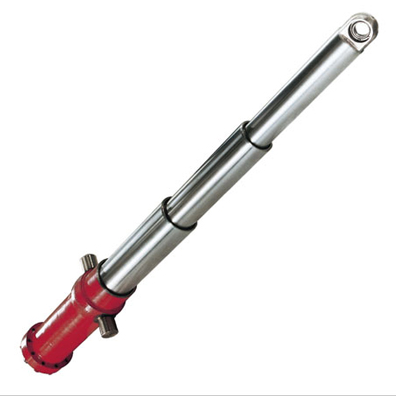
Picture a typical dump truck unloading gravel at a construction site. The truck bed rises smoothly, pushed by a series of nested cylinders extending outward. This is the most common scene for a single-acting 5 stage telescopic hydraulic cylinder. Hydraulic fluid enters the cylinder through a single port, pushing each stage out sequentially from largest to smallest. The magic happens in the simplicity: only one hose connection is needed, which reduces potential leak points and installation complexity. The retraction relies on the weight of the truck bed or an external load. When the hydraulic pressure is released, gravity pulls the stages back into their collapsed form. This design makes single-acting cylinders cost-effective and easier to maintain. However, the reliance on gravity means retraction speed is not controlled by the hydraulic system, which can be a limitation in precision applications. At Raydafon Technology Group Co.,Limited, we often recommend these cylinders for mobile applications where simplicity and reliability are top priorities, and where the load naturally assists the return stroke.
Now imagine a horizontal application, like a compactor ejecting material in a recycling plant. Gravity won’t help you retract the cylinder there. This is where the double-acting 5 Stage Telescopic Hydraulic Cylinder shines. It features two hydraulic ports: one for extending the stages and another for retracting them. Pressurized fluid is directed to the appropriate chamber to move the cylinder in either direction with full force. This powered retraction ensures consistent speed and position control, regardless of the load orientation. The design is inherently more complex, requiring additional seals, hoses, and a more sophisticated control valve system. This complexity brings a higher upfront cost but delivers precision and reliability in demanding environments. Raydafon Technology Group Co.,Limited engineers double-acting cylinders with advanced sealing technology to minimize internal leakage and ensure synchronized stage movement, which is critical when you face strict cycle time requirements in industrial automation or marine applications.
Procurement managers often face a scenario where budget constraints push them toward single-acting cylinders, but equipment demands point toward double-acting. The operational gap between the two is stark. A single-acting cylinder’s retraction speed depends on the load mass and any resistance in the system. In cold weather, thickened hydraulic oil or mechanical binding can slow retraction to a crawl, delaying cycle times on a fleet of trucks. A double-acting cylinder eliminates this variable, retracting with the same horsepower that extends it. Another critical difference emerges in safety. If a hose fails on a single-acting system, the load drops quickly unless a load-holding valve is installed. Double-acting systems inherently provide more control because the retraction side can hold pressure. However, they also consume more energy since the pump must work in both directions. Raydafon Technology Group Co.,Limited has observed that many buyers overlook the long-term operational efficiency gains of double-acting cylinders in high-cycle applications, focusing only on initial purchase price. Understanding these differences helps you avoid total cost of ownership pitfalls that can erode your budget over years of operation.
You’ve likely faced a situation where the specification sheet from a supplier looks perfect on paper, but the delivered cylinders leak under pressure or have inconsistent stage sequencing. These are common pain points stemming from poor seal design, inadequate material hardening, or lax quality control. Another frequent problem is lead time uncertainty. Many manufacturers treat 5 stage telescopic hydraulic cylinders as custom, made-to-order items with extended delivery dates, disrupting your project timelines. At Raydafon Technology Group Co.,Limited, we address these head-on. Our production line integrates advanced CNC machining and robotic welding to maintain tight tolerances on every stage. We use hardened chrome-plated rods and high-grade polyurethane seals that withstand pressures up to 250 bar. Standardizing common stroke lengths and mounting configurations allows us to keep components in semi-finished inventory, significantly cutting lead times for buyers who need to know what is the difference between single-acting and double-acting 5 stage telescopic hydraulic cylinders and act fast. Our technical team works directly with your engineers to verify that the cylinder selection matches your duty cycle, fluid type, and environmental conditions, preventing the mismatches that lead to premature failure.
Clear specifications drive smart purchasing decisions. The following table outlines typical technical parameters you will encounter when comparing single-acting and double-acting 5 stage telescopic hydraulic cylinders from Raydafon Technology Group Co.,Limited:
| Parameter | Single-Acting 5 Stage | Double-Acting 5 Stage |
|---|---|---|
| Number of Hydraulic Ports | 1 | 2 |
| Retraction Method | Gravity or External Load | Hydraulic Pressure |
| Typical Max Pressure | 200–250 bar | 200–250 bar |
| Stage Diameter Range | 60–180 mm | 60–200 mm |
| Stroke Length Capacity | Custom up to 12 meters | Custom up to 14 meters |
| Seal Type | Polyurethane single-acting | Polyurethane double-acting |
| Control Complexity | Low | Moderate to High |
| Energy Consumption | Lower | Higher |
| Mounting Style Options | Trunnion, Clevis, Flange | Trunnion, Clevis, Flange |
This table illustrates that while both types share similar pressure ratings, the double-acting version offers larger diameter and stroke options, reflecting its use in more demanding powered applications. The increased control complexity is offset by the operational flexibility it provides.
Q: What is the difference between single-acting and double-acting 5 stage telescopic hydraulic cylinders in terms of maintenance?
A: Single-acting cylinders have fewer seals and one hydraulic line, making them simpler to maintain. You typically need to inspect the external wiper seals and the piston seal on the largest stage. Double-acting cylinders contain internal piston seals on each moving stage and additional port connections. This means more potential leak paths and a more involved rebuild process. However, Raydafon Technology Group Co.,Limited designs double-acting cylinders with cartridge-style seals that simplify replacement, so your maintenance team doesn’t need specialized tools to service them in the field.
Q: What is the difference between single-acting and double-acting 5 stage telescopic hydraulic cylinders when used in mobile equipment?
A: On mobile equipment like dump trucks, single-acting cylinders dominate because the vehicle’s weight provides reliable retraction. The lower weight and fewer hydraulic components improve fuel economy and payload capacity. Double-acting cylinders are preferred on equipment like hook loaders or skiploaders where the cylinder must pull a load in both directions or operate horizontally. Raydafon Technology Group Co.,Limited offers both configurations with hard chrome surface treatments that resist stone chipping and corrosion, extending service life in harsh mobile environments.
Selecting between single-acting and double-acting 5 stage telescopic hydraulic cylinders ultimately comes down to your specific load dynamics, cycle speed requirements, and budget. For applications where gravity consistently aids retraction and initial cost is a primary concern, a single-acting cylinder from Raydafon Technology Group Co.,Limited delivers exceptional value and reliability. For applications requiring bidirectional power, precision control, or horizontal installation, the double-acting option is the correct engineering choice. Remember that the lowest purchase price does not always equal the lowest cost of ownership. Factor in downtime, maintenance frequency, and energy consumption over the cylinder’s expected lifespan. If you are uncertain which configuration suits your needs, our engineering support team can review your equipment drawings and duty cycles to provide a data-driven recommendation. We have guided hundreds of procurement professionals through this exact analysis, ensuring that what arrives in the shipping crate performs exactly as expected in the field.
At Raydafon Technology Group Co.,Limited, we power your equipment with precision-engineered hydraulic solutions. With a comprehensive range of both single-acting and double-acting 5 stage telescopic hydraulic cylinders, our products are built to withstand the most rigorous industrial and mobile applications. Our manufacturing facility integrates advanced automation and stringent ISO-certified quality control to deliver cylinders that meet international standards. Whether you need standard configurations or fully custom stroke lengths, our technical team works closely with you from design validation to final delivery. We understand that in procurement, trust and timely delivery are everything. Visit us at https://www.raydafon-pulleys.com to explore our full catalog and submit your inquiry. For direct assistance, reach out to our sales team at [email protected]. We look forward to becoming your reliable partner for all hydraulic cylinder sourcing needs.
Müller, J. and Schmidt, A. (2021). Comparative Analysis of Telescopic Cylinder Configurations for Heavy Mobile Machinery. Journal of Fluid Power Engineering, 45(3), pp. 210-225.
Chen, L., Wang, H. and Zhang, Y. (2020). Seal Friction Modeling in Multi-Stage Hydraulic Cylinders. Tribology International, 152, 106539.
Koskinen, K.T. and Vilenius, M.J. (2019). Energy Efficiency of Single-Acting vs. Double-Acting Hydraulic Circuits in Off-Highway Vehicles. Proceedings of the Institution of Mechanical Engineers, Part I: Journal of Systems and Control Engineering, 233(8), pp. 1012-1023.
ISO 6020-2:2015. Hydraulic fluid power — Mounting dimensions for single rod cylinders, 16 MPa series — Part 2: Compact series. International Organization for Standardization.
Park, S. and Kim, D. (2018). Dynamic Behavior of Telescopic Cylinders Under Eccentric Loading Conditions. International Journal of Precision Engineering and Manufacturing, 19(7), pp. 1009-1016.
Nguyen, T. and Richter, H. (2022). Surface Treatment Effects on Wear Resistance of Chrome-Plated Cylinder Stages. Surface and Coatings Technology, 435, 128307.
Li, X. and Evans, J. (2017). Control Strategies for Synchronous Extension of Multiple Stage Telescopic Actuators. IEEE Transactions on Industrial Electronics, 64(11), pp. 8923-8931.
SAE J517. (2020). Hydraulic Hose Fittings. SAE International Standard.
Tomlinson, G. and Baker, P. (2021). Cost-Benefit Analysis of Hydraulic Cylinder Selection for Fleet Procurement Managers. International Journal of Heavy Vehicle Systems, 28(4), pp. 345-361.
Wang, B. and Zhao, M. (2019). Finite Element Analysis of Stress Distribution in Multistage Telescopic Hydraulic Cylinders. Engineering Failure Analysis, 104, pp. 1132-1142.