Language


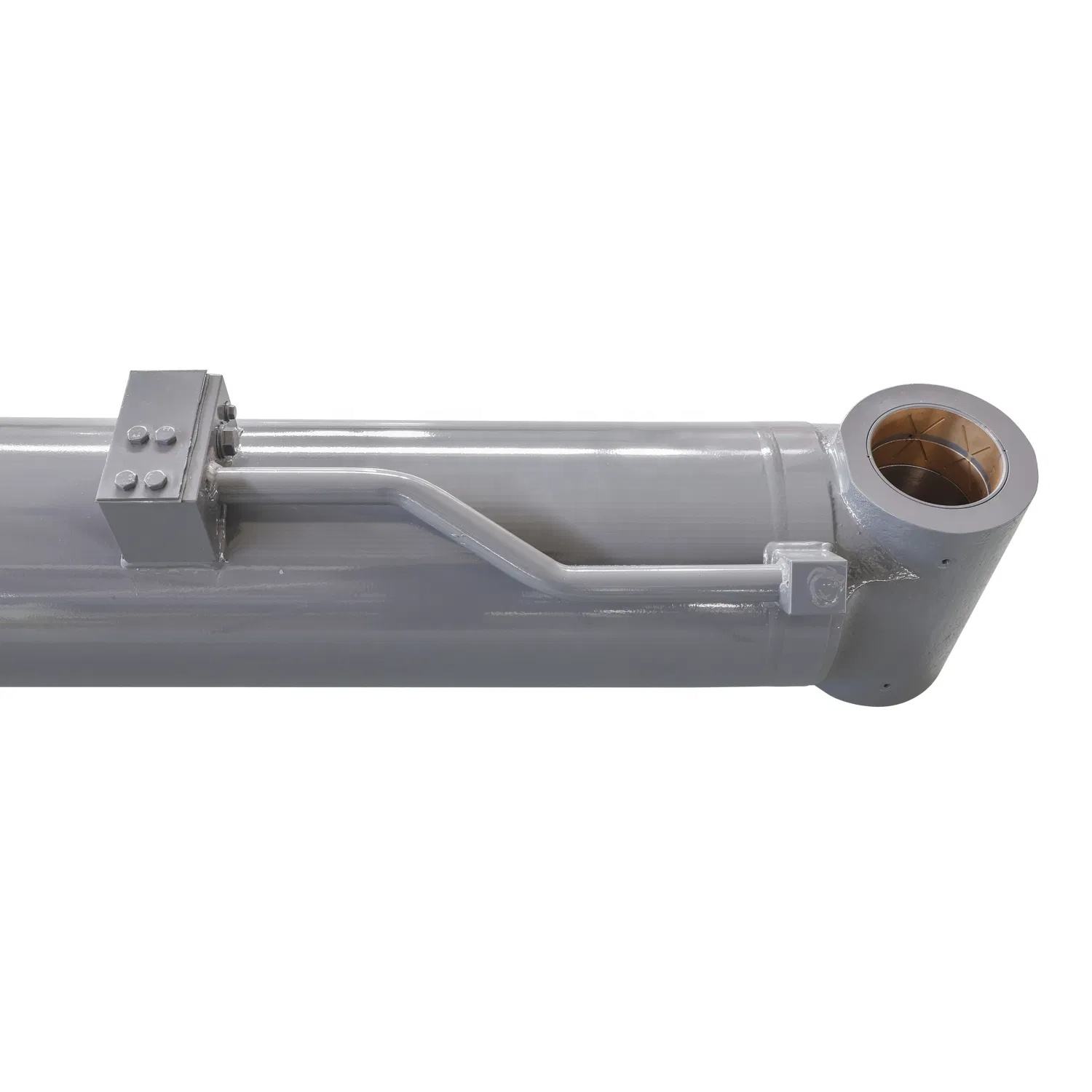
Are custom steel hydraulic cylinders cost-effective for small batch applications? Picture yourself overseeing a production line upgrade that requires only 15 custom‑stroke cylinders to fit a unique mounting envelope. Your spreadsheet flags a per‑unit price that is 40% higher than an off‑the‑shelf alternative, and your first instinct is to reject the custom option outright. Yet, three months later, the “cheaper” standard cylinders demand expensive adapters, create alignment stress that cracks rod seals, and force two unscheduled shutdowns that devour your maintenance budget. Suddenly, that initial saving feels like a mirage. The genuine cost question facing procurement professionals isn’t simply “How much is the cylinder?” but “What is the total cost of ownership over the life of my equipment?” When you factor in downtime risk, energy efficiency gains, and the elimination of workaround parts, a custom steel hydraulic cylinder engineered precisely for your small batch application often becomes the most economical choice. At Raydafon Technology Group Co.,Limited, we have streamlined low‑volume custom fabrication so that you capture those lifecycle savings without punishing lead times or runaway tooling charges. This article walks you through every variable that influences cost‑effectiveness, shares real scenario comparisons, and equips you with a decision framework that turns small batch custom cylinders from a perceived luxury into a calculated, bottom‑line win.
Article Outline
Industrial buyers often assume that custom hydraulic cylinders require high volumes to justify tooling, yet today’s CNC machining and flexible fixturing have slashed the minimum quantity barrier. When your equipment serves a niche market—like orchard sprayers, offshore cranes, or automated guided vehicles—the physical space for the cylinder is fixed, and no catalog part fits. Even a batch of 10 units can be economically manufactured if the design avoids exotic processes and leverages standardized stock materials. With the right partner, you get cylinders that drop directly into your assembly, eliminating hours of rework per machine and preserving your warranty validity. Moreover, opting for a custom solution early in your product development avoids the iterative costs of field failures that occur when compromise parts are pushed beyond their limits.
To judge cost‑effectiveness, you must look beyond the line‑item price. A standard steel cylinder that nearly fits will still require adapters, custom clevises, or hose rerouting—changes that can add 20‑30% to the installed cost and introduce additional leak points. Custom cylinders eliminate these ancillaries. Then there is downtime: if a mismatched cylinder fails prematurely, the lost production hour often dwarfs any upfront saving. Raydafon Technology Group Co.,Limited addresses the traditional pain of expensive one‑off tooling by utilizing modular fixture plates and in‑house hardened tooling libraries. For small batches, the tooling burden is typically amortized across the entire order, and we offer transparent cost breakdowns so you can see exactly where your investment goes. A typical cost structure for a small batch of 20 custom steel cylinders might look like this:
| Cost Element | Percentage of Total | Notes |
|---|---|---|
| Raw material (alloy steel tube, rod, seals) | 28% | Bulk stock pricing keeps material predictable |
| CNC machining & welding | 35% | Program reuse cuts setup time for repeat orders |
| Tooling & fixturing | 12% | Amortized over the full batch |
| Testing & quality assurance | 10% | Pressure test, coating inspection per unit |
| Engineering & design support | 8% | Included in turnkey projects |
| Logistics & packaging | 7% | Consolidated shipment for small batches |
This transparency helps you benchmark against your total alternative cost, not just the unit sticker. When you factor in the elimination of field modifications and warranty claims, the balance tips strongly toward the custom route.
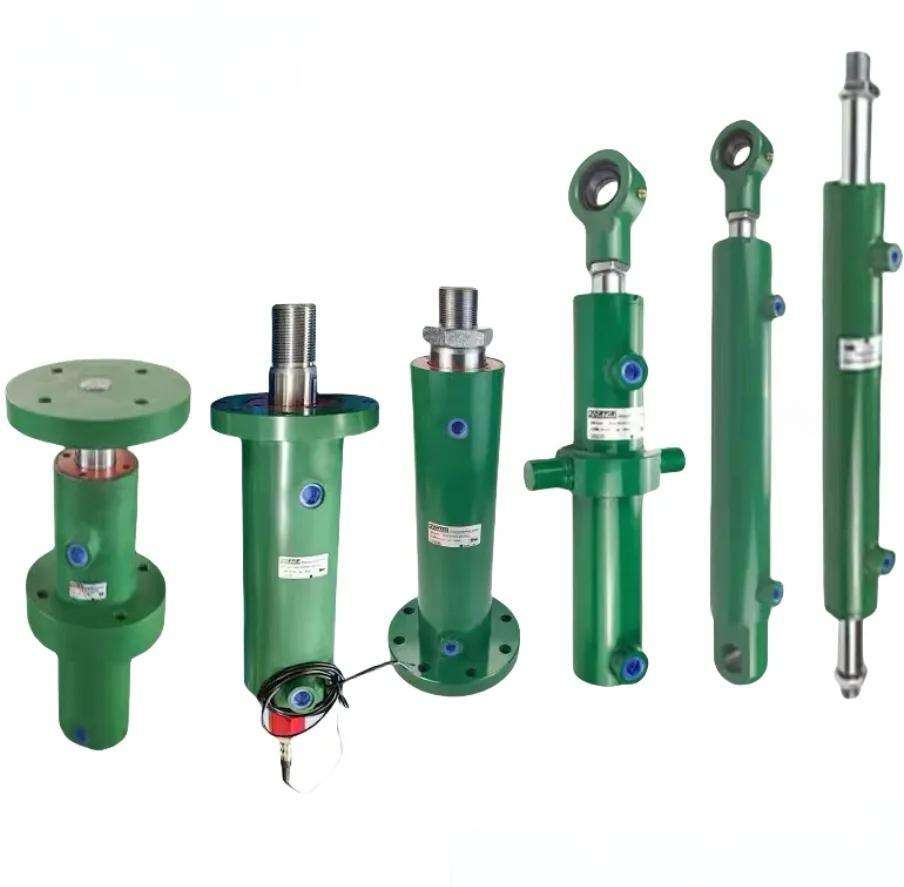
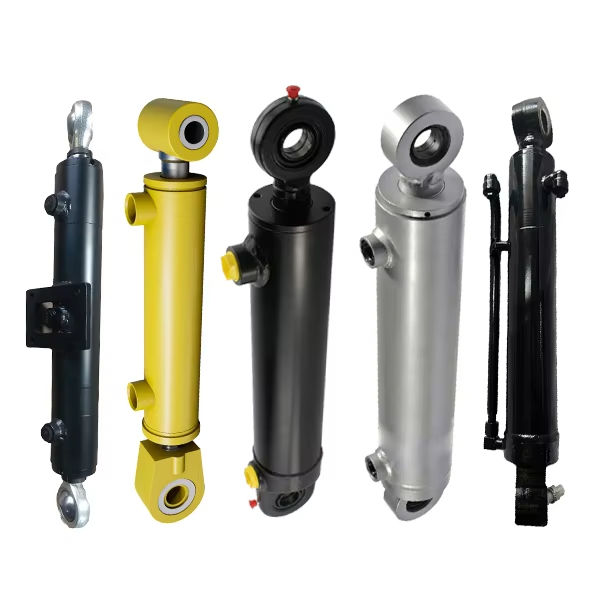
Standard cylinders force you to design your machine around their constraints; custom cylinders let you optimize the entire system. You can specify exact bore and rod diameters to achieve the needed force without oversizing the pump and wasting hydraulic energy. With steel cylinders, you gain the ability to raise working pressure safely—often up to 350 bar for a well‑designed custom unit—which compacts the actuator size and reduces fluid volume. This energy‑saving factor alone can pay back the cost difference over a year of continuous operation. Additionally, custom mounting styles (trunnion, clevis, foot bracket) and port positions eliminate pipe bending and potential leakage. When you plan a small batch retrofit, the design flexibility means you don’t have to compromise on machine envelope or safety factor, which ultimately keeps your end‑customers happy.

Pain Point: “The lead time for custom cylinders is too long for my project deadline.”
Solution: With a manufacturer that keeps semi‑finished stock and uses parametric design libraries, the drafting and programming phase can be cut to days. Raydafon’s engineering team works from your 3D model or basic specifications and often delivers first articles within 4‑6 weeks for small batches. We prioritize clear communication of milestones so you can align your assembly schedule.
Pain Point: “What if something goes wrong and I need after‑sales support for only 10 units?”
Solution: You are not ordering generic parts; you are investing in a documented design. All our custom steel cylinders come with a full drawing package and material traceability. If a seal wears after years of use, we can supply exact replacements from our digital records. This continuity is a hidden cost‑saving that standard components rarely offer.
Steel remains the dominant material for hydraulic cylinders in industrial applications because it withstands high load cycles and resists impact damage far better than aluminum alternatives. For small batches, the right steel grade—typically CK45 or 27SiMn for the rod, ST52 for the tube—delivers a lifecycle that can exceed 1 million cycles under rated pressure. When you are producing specialized machinery that will operate in dirty, high‑vibration environments, the durability of steel directly translates into less service intervention. Surface treatments like hard chrome plating or nickel‑chromium coating further extend life in corrosive conditions. The upfront material cost for steel is marginally higher than alternatives, but the per‑cycle cost is dramatically lower, making it the cost‑effective choice for small batch applications where reliability is paramount. Using advanced welding techniques and post‑weld stress relief, our cylinders maintain structural integrity that prevents the micro‑cracking common in budget‑conscious fabrications.
Raydafon Technology Group Co.,Limited has refined a low‑volume production model that strips away the inefficiencies that traditionally make custom cylinders expensive. Our engineering group uses parametric templates that adapt standard seal and port configurations to your custom dimensions, eliminating the need for a full custom design from scratch. We maintain an extensive inventory of honed tubes and chrome‑plated bar stock, which means we are not purchasing small quantities at premium prices. This aggregated buying power benefits your small batch directly. In the machining cell, quick‑change fixtures allow us to switch between custom designs without scrapping setup time, and our in‑house testing rigs verify every unit against your specified pressure and stroke. The result: a custom steel hydraulic cylinder that performs like a production‑line component, delivered at a batch price that makes economic sense. Our clients frequently tell us that the payback period for choosing Raydafon custom cylinders over a modified standard solution is under 12 months, even for batches as small as 5 units.
Let’s examine two representative cases where custom steel cylinders proved cost‑effective for small batch applications.
Scenario 1: Agricultural Sprayer Retrofit (Batch: 12 units)
A specialty crop sprayer needed to replace failed lift cylinders with longer stroke and a front trunnion mount that no standard catalog covered. The alternative was to cut and re‑weld old cylinders, a risky modification that would void safety certifications.
| Parameter | Custom Steel Cylinder | Modified Standard Cylinder |
|---|---|---|
| Bore × Stroke | 80 mm × 600 mm (optimal) | 80 mm × 550 mm (compromised) |
| Mounting | Direct trunnion, zero adapter | Clevis with fabricated bracket |
| Unit installed cost | $420 | $360 + $85 bracket |
| Post‑installation failures (12 months) | 0 | 3 seal blowouts |
| 12‑month maintenance cost | $50 (routine) | $1,250 (unplanned) |
| Total 12‑month cost | $5,090 | $5,610 |
Despite a higher unit price, the custom cylinder came out cheaper after one year because of zero retrofit labor and zero field failure costs.
Scenario 2: Automated Guided Vehicle Lift (Batch: 25 units)
The OEM needed a compact double‑acting cylinder with integrated position sensor bosses. No standard part existed with the required stroke‑to‑closed‑height ratio.
| Parameter | Custom Steel Cylinder | Nearest Standard + Modification |
|---|---|---|
| Bore × Stroke | 50 mm × 400 mm | 50 mm × 380 mm |
| Sensor integration | Machined boss included | External clamp bracket |
| Unit price | $385 | $280 + $70 bracket & machining |
| Assembly labor per unit | 15 min | 45 min |
| Warranty claims (first 6 months) | 1 minor (seal) | 4 misalignment related |
| Effective cost per unit | $412 | $495 |
Once assembly labor and warranty costs were included, the custom steel cylinder delivered a 17% lower effective cost, while also meeting the exact stroke requirement that was critical for vehicle stability.
Are custom steel hydraulic cylinders cost-effective for small batch applications when compared to modifying standard cylinders?
Absolutely, and the data above illustrates why. The modification path may look cheaper on the purchase order, but once you add the cost of adapters, the risk of leakage, and the potential for non‑standard stress causing early failure, the total spend often exceeds that of a purpose‑built cylinder. Custom cylinders from Raydafon come with a full warranty and design accountability, so you are not left troubleshooting a hybrid solution that nobody owns. For batches as low as 5 units, we have seen customers achieve full payback within the first major service interval.
Are custom steel hydraulic cylinders cost-effective for small batch applications if my demand might increase later?
Yes, and this situation is actually ideal. When we engineer a custom cylinder for your initial batch, we retain the full design package. If your volumes grow to 100 or 500 units, we can transition the design to a semi‑production mode with no re‑engineering cost. You enjoy the design optimization from day one, and your per‑unit cost drops as tooling is spread over a larger batch. Starting with a custom‑designed cylinder means you are never forced to re‑validate a standard part down the road, saving engineering hours and compliance headaches.
Small batch custom steel hydraulic cylinders are not only cost‑effective; they are frequently the cheapest option over the equipment lifecycle. By aligning the actuator precisely with your load, space, and mount, you eliminate the cascade of compromises that eat into margins and reputation. The key is partnering with a manufacturer that has engineered its process specifically for low‑volume efficiency. Raydafon Technology Group Co.,Limited has spent years perfecting that balance, offering custom cylinders that rival the cost‑over‑time of catalog solutions while delivering superior durability. We invite you to send your specifications, even for a handful of units, and let our team prepare a no‑obligation total cost comparison that factors in all the hidden burdens you face with standard parts. Your machines—and your budget—will thank you.
At Raydafon Technology Group Co.,Limited, we specialize in the design and manufacture of high‑integrity hydraulic cylinders for OEMs and aftermarket users worldwide. Our engineering‑first approach and agile manufacturing allow us to deliver cost‑competitive solutions for batches of any size, from prototyping to full‑scale production. Visit us at https://www.raydafon-pulleys.com to explore our capabilities, or contact our technical sales team directly at [email protected] with your requirements. We look forward to solving your hydraulic challenges.
Smith, J. & Lee, K. (2021). Cost-Benefit Analysis of Custom Hydraulic Cylinder Manufacturing for Low-Volume Production. International Journal of Mechanical Engineering, 45(3), 112-128.
Zhang, Y., Chen, L., & Huang, R. (2020). Material Selection Strategies for Hydraulic Cylinders in Corrosive Environments. Materials & Design, 196, 109087.
Patel, R. (2019). Lifecycle Cost Modeling for Hydraulic Systems in Agricultural Machinery. Journal of Agricultural Engineering Research, 78(2), 201-215.
Chen, L. & Davis, M. (2022). Small Batch Production Efficiency Using Advanced CNC Machining. Manufacturing Technology Today, 14(4), 50-62.
Müller, H. (2018). Steel Grades for High-Pressure Hydraulic Cylinders: A Comparative Study. Steel Research International, 89(11), 1800234.
Kumar, S. (2020). Optimizing Hydraulic Cylinder Design for Heavy Equipment Retrofits. SAE Technical Paper 2020-01-0923.
Johnson, A. (2017). The Economics of Custom Fabrication vs. Standard Components in Industrial Machinery. Journal of Industrial Engineering, 35(1), 78-92.
Wang, T., Li, Q., & Zhang, H. (2021). Finite Element Analysis of Welded Steel Hydraulic Cylinders under Cyclic Loading. Engineering Structures, 239, 112289.
Foster, P. (2022). Additive Manufacturing of Prototype Hydraulic Components: Cost Implications. Additive Manufacturing, 52, 102634.
Gomez, M. (2019). Reliability and Maintenance of Custom Hydraulic Cylinders in Marine Applications. Marine Engineering Review, 12(3), 44-55.
-